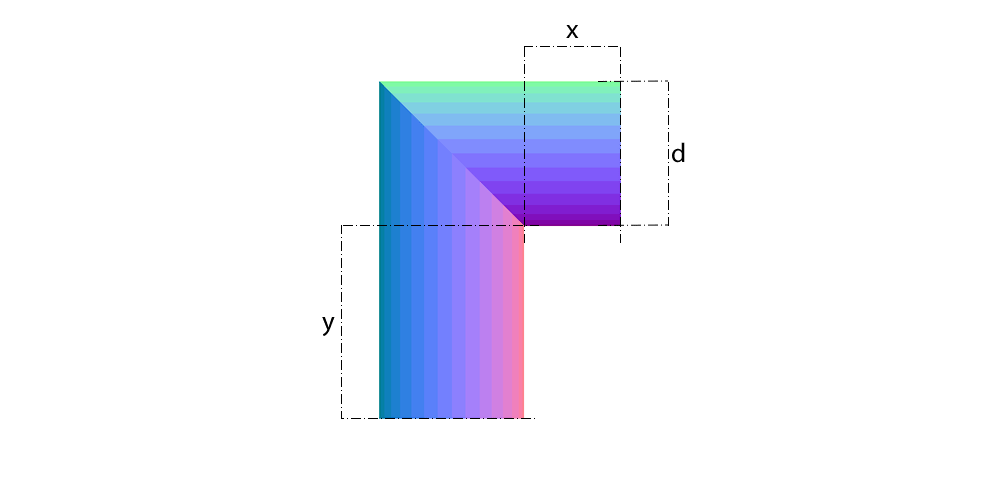
Elbow flat pattern
What it is
The elbow is the two-gore bend: two half shells cut at an angle and welded to each other. It is the cheapest direction change in plate, with a single circumferential weld.
Where it is used
Offsets in exhaust and ventilation, discharges, short connections where there is no room for a larger radius.
Measurements the calculation needs
- D Diameter
- X Measurement X
- Y Measurement Y
- DV Divisions
- THK Thickness
Worked example
The values the form comes pre-filled with, run through the tool itself:
| Diameter | 200 mm |
|---|---|
| Measurement X | 50 mm |
| Measurement Y | 200 mm |
| Divisions | 16 |
| Thickness | 10 mm |
| The flat pattern fits a plate of | 597 × 395 mm |
| Flat patterns produced | 2 |
Frequently asked questions
- How does the elbow differ from a segmented bend?
- The elbow is the two-gore case. It is quicker to make, but the change of direction is abrupt and pressure loss is higher than with more segments.
- What are X and Y?
- The two legs of the elbow, measured from where the axes meet to each opening. Together they set the offset angle.