Truncated Cylinder flat pattern
What it is
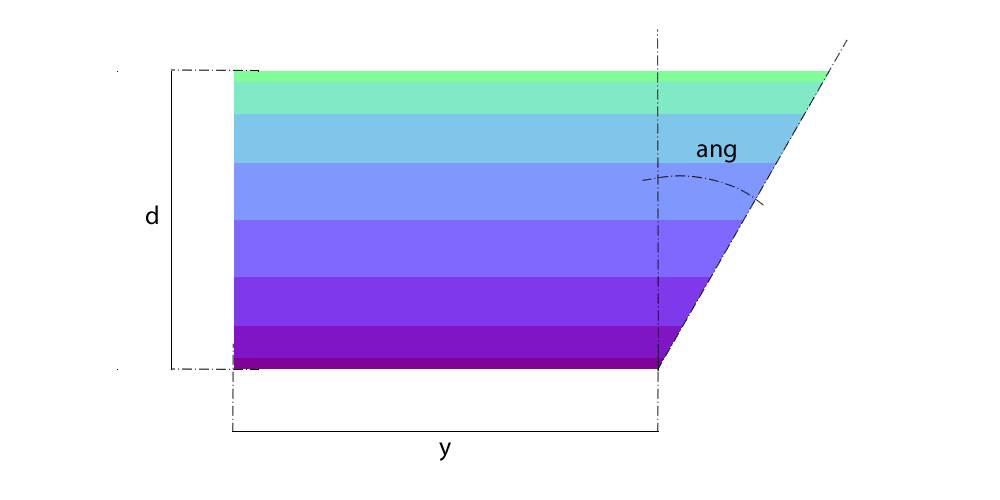
A rolled shell cut on an inclined plane at one end. Developed, the cut edge becomes a sine wave: its height comes from the cut angle and its length from the circumference of the shell.
Where it is used
Pipe entering an inclined wall, discharge openings, column feet cut to floor angle, roof penetrations.
Measurements the calculation needs
- D Diameter
- Y Measurement Y
- ANG Angle
- DV Divisions
- THK Thickness
Worked example
The values the form comes pre-filled with, run through the tool itself:
| Diameter | 200 mm |
|---|---|
| Measurement Y | 50 mm |
| Angle | 40° |
| Divisions | 16 |
| Thickness | 10 mm |
| The flat pattern fits a plate of | 597 × 214 mm |
Frequently asked questions
- What is measurement Y?
- The height of the short side of the part, taken where the inclined cut meets the shell. The tall side follows from the angle you enter.
- Why does the cut edge become a wave rather than a straight line?
- Because when the cylinder is unrolled, every point on the inclined opening was at a different height. That variation, spread along the circumference, traces exactly a sine wave.
Calculate a Truncated Cylinder
An account is required. The free tier covers 20 calculations a month.