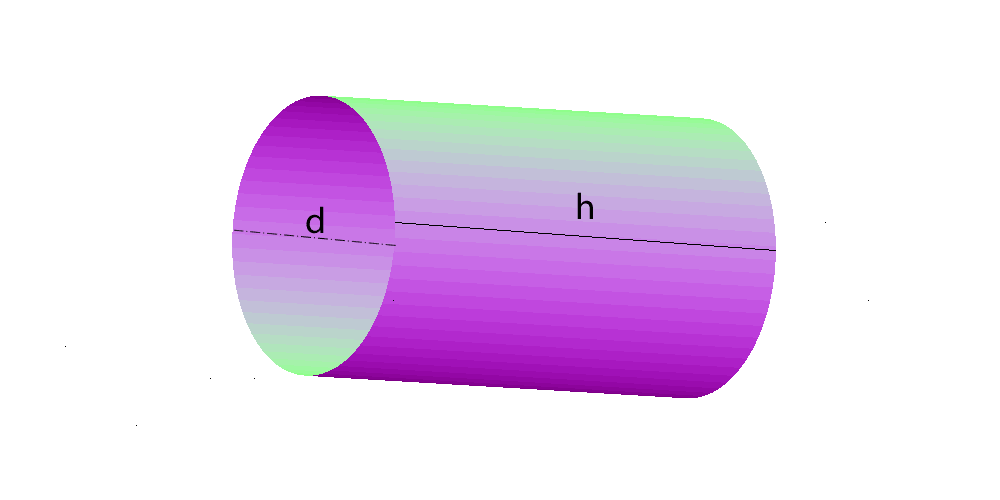
Cylinder flat pattern
What it is
The rolled shell is the straight tube: a plate run through the rolls until both edges meet, closed with one longitudinal weld. It is the simplest part in the trade and the basis of nearly everything else — stacks, ducts, silos and tank shells are stacked cylinders.
Where it is used
Exhaust ducting, chimneys, tank and vessel shells, equipment jackets, large-diameter pipe fabricated from plate.
Measurements the calculation needs
- D Diameter
- H Height
- THK Thickness
Worked example
The values the form comes pre-filled with, run through the tool itself:
| Diameter | 300 mm |
|---|---|
| Height | 500 mm |
| Thickness | 3 mm |
| The flat pattern fits a plate of | 933 × 500 mm |
Frequently asked questions
- Why is the plate length not π times the outside diameter?
- Because the plate neither stretches nor compresses at the neutral axis, which sits at mid-thickness. The correct length is π times the mean diameter — the outside diameter less one thickness. On a 300 mm shell in 3 mm plate that is over 9 mm, more than enough to leave the weld short.
- Does the flat pattern include weld preparation?
- No. The result is the finished part on the neutral axis. If your process needs a bevel, root gap or extra stock, add it to the calculated figure according to your shop practice.